India to the World: Building the Future of Global Food Supply
Looking to Source, Scale, or Co-Develop in India?
India is transitioning from a volume driven agricultural producer into a strategic global food security partner and a preferred sourcing and innovation base. Supported by strong primary agriculture, expanding food processing infrastructure, and steadily improving quality, traceability, and compliance frameworks, India now offers scalable, reliable opportunities across the global food value chain.
From enabling global manufacturing scale through technology transfer, to developing export-ready food innovations, providing direct access to producers, structuring contract farming programs, and integrating sustainability at scale India’s evolving ecosystem positions it as a dependable food basket for the world, capable of supporting affordability, resilience, and long-term supply security.
Partner with India for Global Supply
CORE PILLARS: INDIA TO THE WORLD
Looking to Source, Scale, or Build Long-Term Food Partnerships with India?
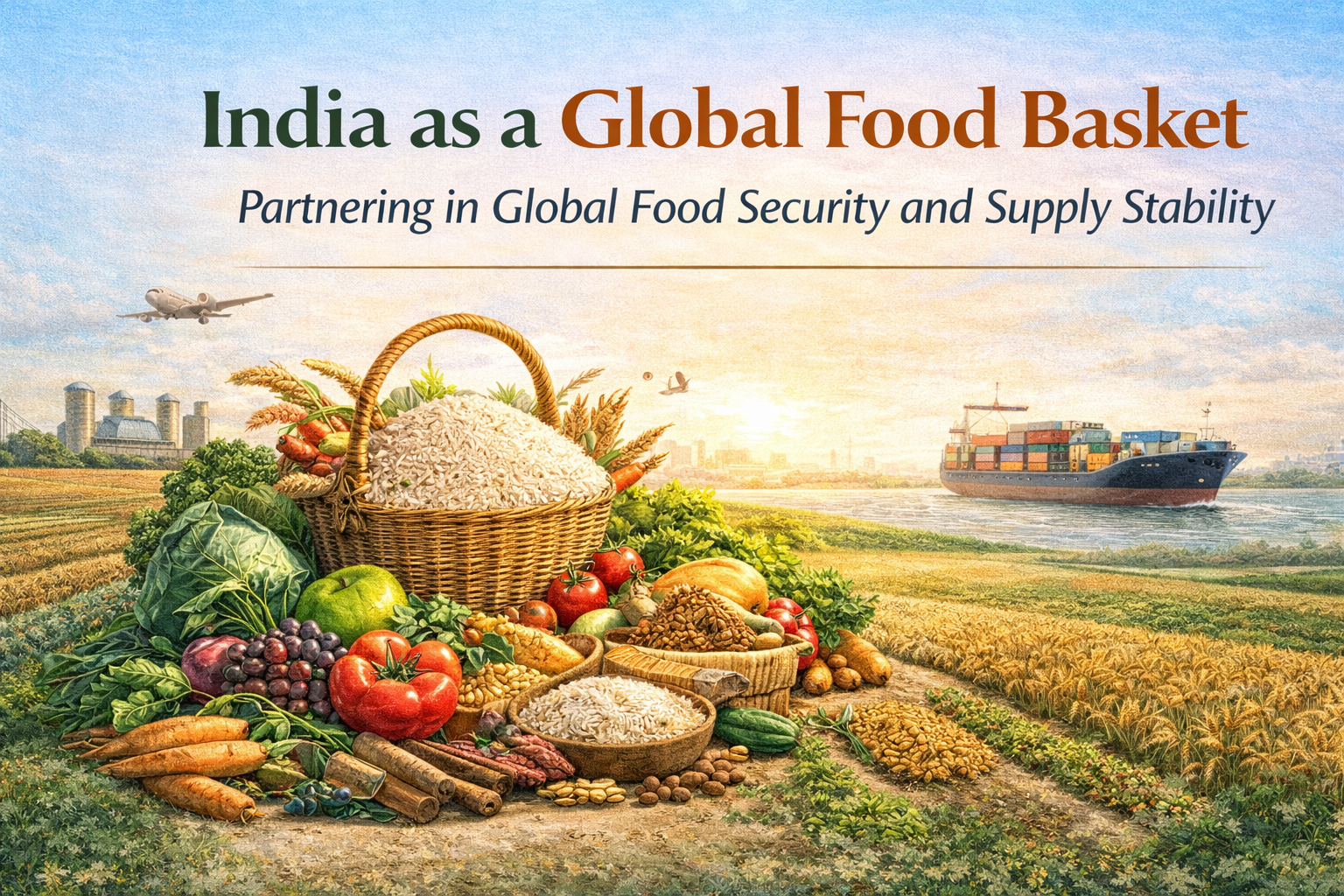
Partnering in Global Food Security and Supply Stability
As global food systems face inflationary pressures, climate volatility, geopolitical disruptions, and supply concentration risks, India is emerging as a stabilising force in global food security. Its relevance lies not only in scale, but in its ability to deliver resilient, diversified, and increasingly value-added food systems that ensure continuity of supply for international markets.
India’s Food Security Advantage: Scale, Resilience & Trust
- One of the world’s largest and most diversified agricultural production bases
- Multi-season cropping and broad geographic spread reducing supply concentration risk
- Expanding processing capacity enabling consistent, export-ready supply
- Shift from raw commodity exports toward value-added food products
- Investments in cold chains, storage, and logistics infrastructure
- Climate-smart sourcing and adaptive farming practices
- Compliance-led production, testing, and traceability aligned with global standards
Together, these strengths allow India to support stable supply, predictable quality, and trusted execution, positioning it as a long-term partner in global food security.
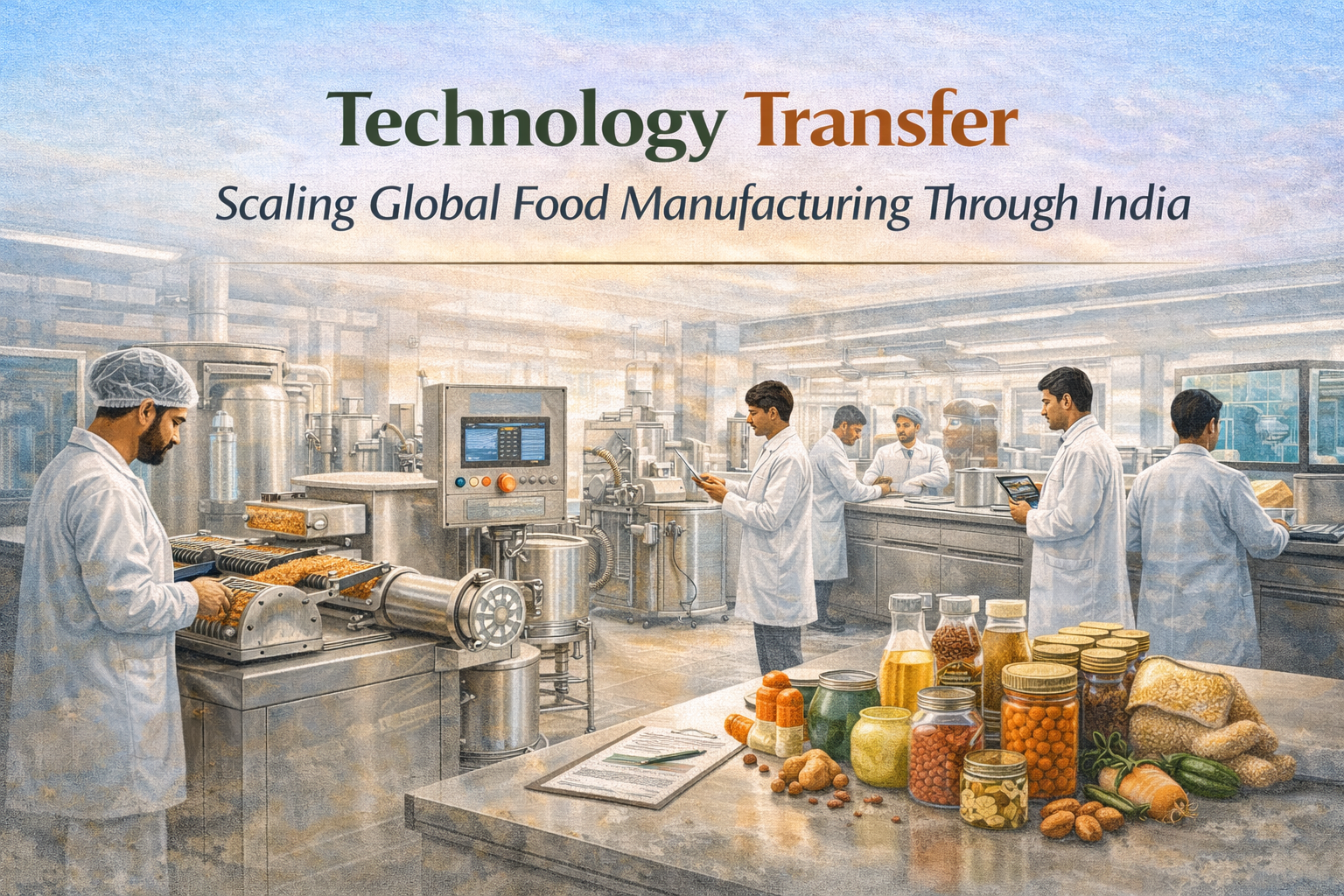
Scaling Global Food Manufacturing Through India
India offers a rapidly maturing ecosystem for technology transfer and manufacturing scale-up, supporting global brands and manufacturers seeking cost efficiency, speed-to-market, and export-ready production.
Well-developed processing clusters, improving quality systems, and a growing pool of skilled technologists enable India to serve as a preferred destination for transferring, localising, and scaling food manufacturing technologies.
Technology Transfer Models
- Licensing and know-how transfer
- Joint ventures and strategic partnerships
- Contract manufacturing and co-development
- Pilot-to-commercial scale transitions
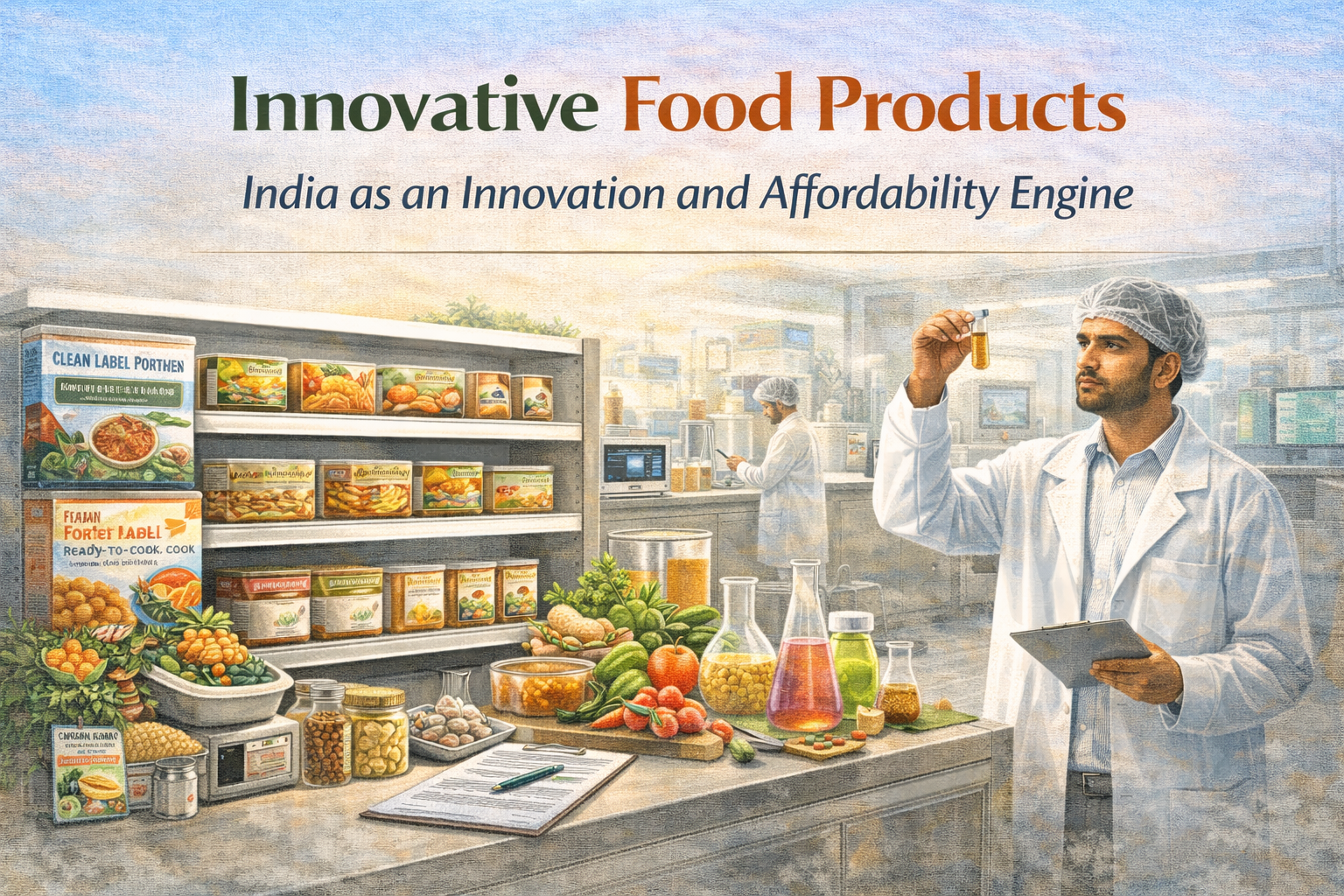
India as an Innovation and Affordability Engine
India is emerging as a global hub for food innovation that balances nutrition, taste, affordability, and scale, particularly for value-driven and high-growth markets.
Innovation efforts increasingly focus on everyday nutrition, clean-label products, and scalable convenience formats, while modernising traditional food systems for global relevance.
Key Innovation Focus Areas
- Health-focused and clean-label foods
- Functional, fortified, and everyday nutrition
- Ready-to-cook, frozen, and convenience formats
From Concept to Export
- R&D and formulation
- Sensory and shelf-life validation
- Packaging and scale-up readiness
- Alignment with global regulatory and buyer specifications
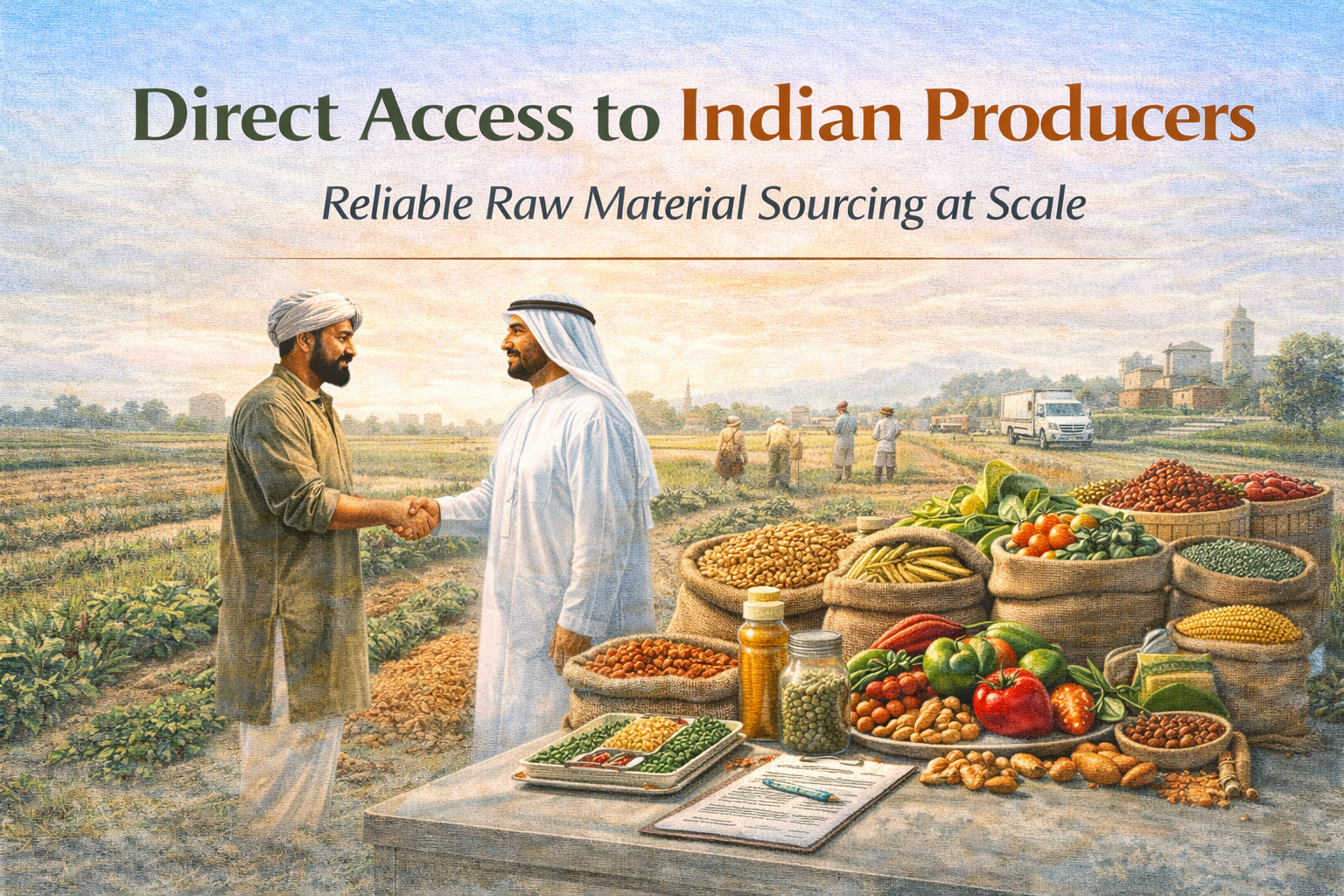
Reliable Raw Material Sourcing at Scale
India provides diversified and scalable access to agricultural commodities and specialty ingredients, strengthening global sourcing strategies and reducing supply risk.
With established producer networks, aggregation models, and processing-linked sourcing, India enables direct, traceable, and standardised procurement aligned with international quality expectations.
Sourcing Strengths
- Grains, millets, pulses, and oilseeds
- Spices, botanicals, and specialty ingredients
- Processing-grade fruits and vegetables
- Quality grading, residue control, and documentation readiness
- Seasonality planning and price-risk management
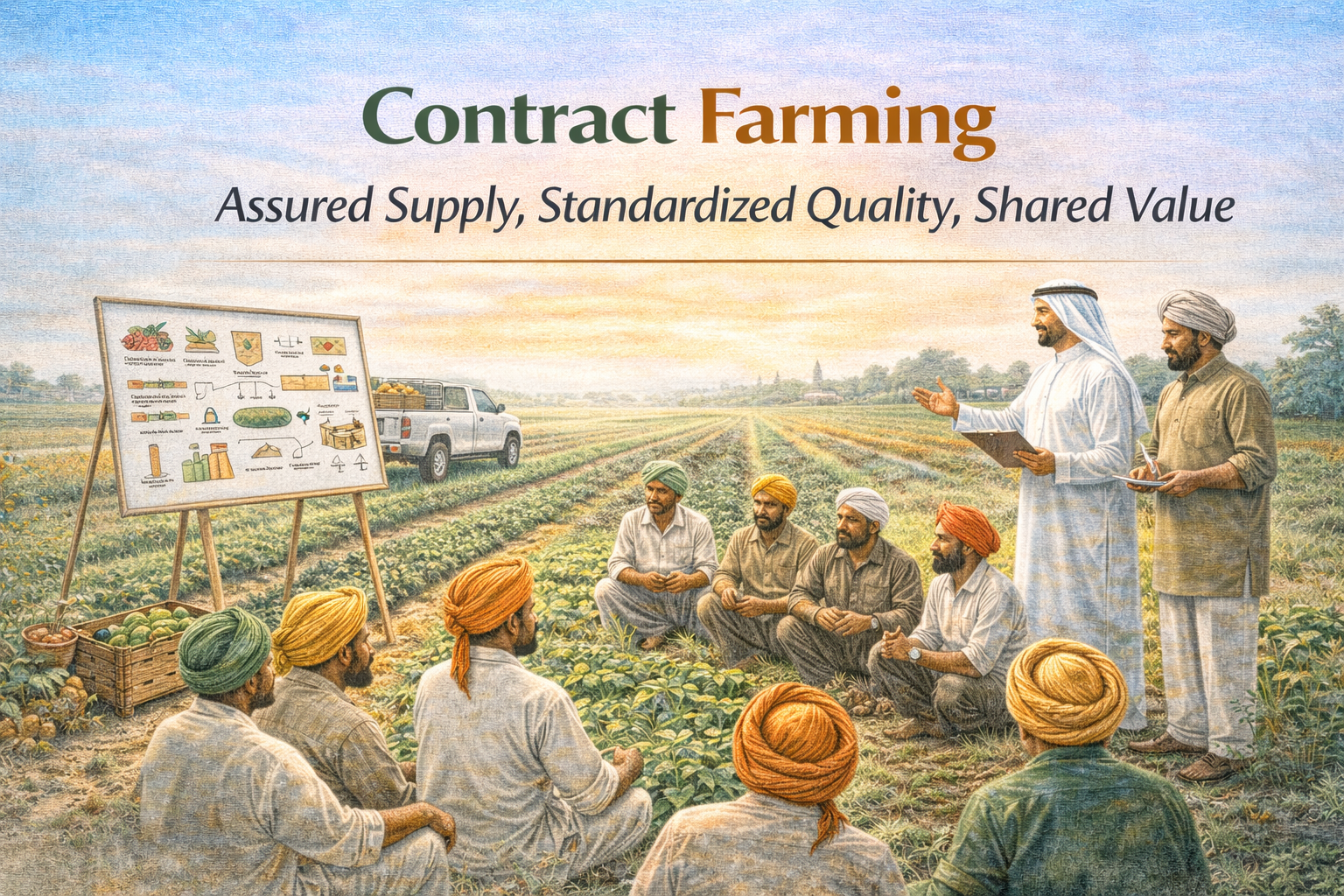
Assured Supply, Standardised Quality, Shared Value
Contract farming in India has evolved into a structured and scalable route-to-market, particularly for export-oriented and large-volume food systems.
By aligning crop planning, quality standards, and demand forecasting, contract farming enables predictable supply, reduced volatility, and stronger integration of farmers into formal value chains.
Why Contract Farming Works
- Predictable supply and consistent quality
- Planned crop cycles aligned to market demand
- Reduced procurement risk and supply volatility
- Commercial models including buyback, assured pricing, and quality premiums
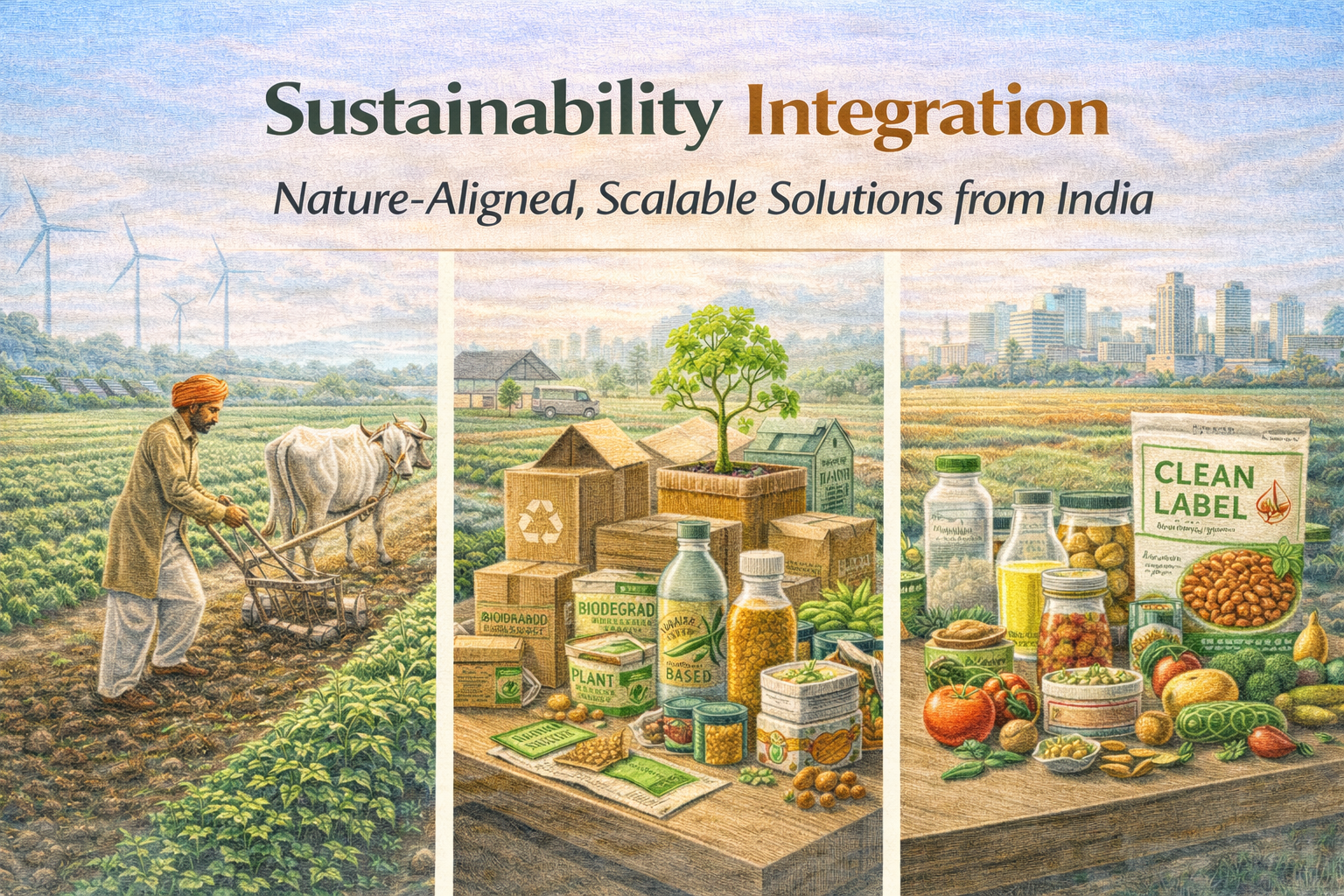
Nature-Aligned, Scalable Solutions from India
India is emerging as a source of practical, scale-ready sustainability solutions integrated across food and allied value chains. Sustainability is increasingly embedded into production, sourcing, and processing, rather than treated as a standalone initiative.
India’s sustainability strengths include:
- Sustainable materials and packaging aligned to regulatory and cost realities
- Regenerative and bio-based agricultural inputs supporting soil health and productivity
- Circular and resource-efficient innovations enabling waste reduction and value recovery
The focus is on implementable sustainability at scale—solutions that meet ESG expectations while remaining commercially viable and supply-chain ready.